
That sharp, throbbing pain at the edge of your toenail makes every step uncomfortable. If you are based in Blackrock or the surrounding South Dublin area, you are not alone. Ingrown toenails are one of the most common foot problems we treat at our clinics. The good news is that most cases can be solved quickly and effectively with the right approach.
Many people put up with the pain for weeks or even months, hoping it will sort itself out. Others try bathroom surgery with nail clippers, which often makes things worse. This post will explain what causes ingrown toenails, what symptoms to watch for, exactly what happens during professional treatment, and when you should see a podiatrist.
What causes an ingrown toenail?
An ingrown toenail develops when the edge or corner of the nail grows into the surrounding skin. This creates pressure, inflammation, and often infection. Three main factors contribute to this problem.
The first is the natural shape of your nail. Some people have nails that curve more than others. This genetic tendency means the nail edge is more likely to press into the skin as it grows. You might notice this runs in your family.
The second factor is friction from footwear. Shoes that are too tight or too narrow push the skin against the nail edge repeatedly. Over time, this constant pressure causes the nail to embed into the soft tissue. People who wear pointed shoes or spend long hours on their feet in tight footwear are particularly at risk.
The third and most common cause is poor cutting technique. Cutting nails too short, cutting too far down the sides, or leaving a sharp edge creates a spicule. This tiny spike of nail then grows forward and digs into the skin. The proper way to cut your nails is to follow the natural curvature, avoid cutting too short, and always file the edges smooth afterwards with no sharp edges remaining.
What are the symptoms of an ingrown toenail?
The big toe is most commonly affected, though any toenail can become ingrown. Early symptoms include tenderness and mild swelling along one side of the nail. The skin may look red and feel warm to the touch.
As the condition progresses, the pain becomes sharper and more constant. You might notice the area is painful when wearing shoes or even when bedsheets touch the toe at night. Walking becomes uncomfortable, and you may find yourself changing how you walk to avoid putting pressure on the toe.
If infection sets in, you may see yellow or green discharge, increased redness spreading beyond the nail edge, and more intense throbbing pain. The skin may start to grow over the nail edge in severe cases.
Do not wait if you see signs of infection. What starts as minor discomfort can quickly become a serious problem that takes longer to resolve.
How is ingrown toenail treated at Foot Focus Podiatry?
Treatment depends on the severity and whether the problem keeps returning. Our CORU-registered podiatrists will assess your toe carefully before recommending the best approach.
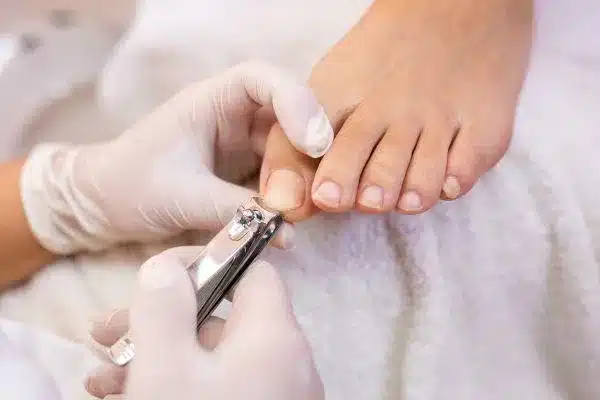
For most patients, conservative treatment is the first step. This involves cleaning the area with antiseptic and carefully removing the offending spicule or nail edge that is digging into the skin. This simple procedure provides immediate relief in about 80% of cases. Most people walk out of the clinic with significantly less pain than when they arrived.
Where conservative treatment has not achieved long-term results, or the nail is severely involuted and curled, nail surgery becomes the recommended option. This is a straightforward procedure performed under local anaesthetic. A small injection numbs the toe completely, so you feel nothing during the treatment. The offending section of nail is removed, and a chemical is applied to that part of the nail bed. This prevents that section from ever regrowing.
The entire procedure takes about 30-45 minutes. Follow-up appointments ensure the toe heals fully. The result is a simple, pain-free, permanent solution to recurring ingrown toenails.
You can find out more about how we treat ingrown toenails at our Dublin clinics on our ingrown toenail page.
What patients in Blackrock are asking about ingrown toenails
Q: Do I need a GP referral to see a podiatrist for an ingrown toenail?
A: No referral is needed. You can book directly with our podiatry clinic online or by phone. Many patients come to us after trying home remedies without success, and we can usually see you within a few days.
Q: How long does ingrown toenail surgery take to heal?
A: Most patients heal fully within 4-6 weeks after nail surgery. You can walk immediately after the procedure, though we recommend taking it easy for the first day or two. Normal activities usually resume within a week.
Q: Can I still exercise with an ingrown toenail?
A: It depends on the severity. Mild cases may allow you to continue with some modifications. However, running or activities that put pressure on the toe often make the problem worse. After conservative treatment or surgery, we will advise you on when to return to exercise safely.
Q: Will my ingrown toenail come back after treatment?
A: Conservative treatment solves most cases permanently, especially when combined with proper nail cutting technique going forward. If the problem does return, nail surgery prevents regrowth of the problematic section. Recurrence after surgery is very rare.
When should you see a podiatrist in Dublin?
Book an appointment if the pain has lasted more than a few days and is not improving. See a foot specialist if you notice redness spreading beyond the immediate nail edge, any discharge from the area, or if the pain is affecting how you walk.
Do not attempt to cut out the ingrown section yourself. This often leaves a sharp edge that grows back worse. If you have had ingrown toenails before that keep returning, professional assessment can identify why and provide a lasting solution.
Patients across Blackrock, Stillorgan, and Dublin 14 can book online at our Mount Merrion clinic. Our Finglas clinic serves North Dublin areas including Dublin 11.
CONCLUSION: Ingrown toenails are painful but highly treatable. Most cases resolve with a single conservative treatment, and recurring problems can be solved permanently with minor nail surgery. As one of Dublin’s largest podiatry providers, Foot Focus Podiatry offers expert ingrown toenail treatment at both our clinics. Book online at footfocus.ie or call us at our Finglas or Mount Merrion clinic to get the relief you need.