
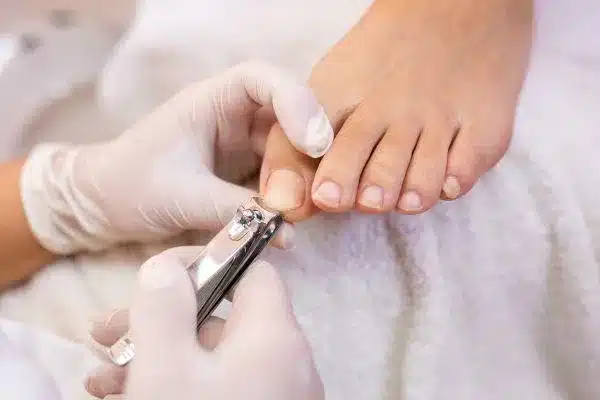
Few things stop you in your tracks quite like an ingrown toenail. That sharp, throbbing pain at the edge of your toe makes every step uncomfortable. Patients from Glasnevin and across North Dublin tell us they have been putting up with the discomfort for weeks or even months before finally seeking help. The good news is that ingrown toenails are one of the most treatable conditions we see. Most people leave our clinic with immediate relief after their first appointment. This post will explain why ingrown toenails happen, what symptoms to watch for, how we treat them at Foot Focus Podiatry, and when you should stop waiting and book an appointment.
What causes ingrown toenails?
Ingrown toenails are very common and can be very painful. They occur when the edge of the nail grows into or presses against the soft skin beside it. Three main factors cause this to happen.
Natural nail shape. Some people have nails that naturally curve more than others. This inherited tendency means the nail edges are more likely to dig into the skin as they grow. You might notice this runs in your family.
Poor cutting technique. This is the most preventable cause. Cutting nails too short or too far down the sides leaves a sharp edge or spicule that can pierce the skin as the nail grows out. Many patients we see have accidentally created the problem while trying to fix it themselves at home.
Shoe friction. Tight shoes or footwear that presses on the nail can push the nail edge into the surrounding skin. This is particularly common in runners, footballers, and anyone wearing narrow dress shoes or heels regularly. The repeated pressure causes the nail to grow abnormally.
Once the nail edge breaks the skin, bacteria can enter. This leads to infection, increased swelling, and significantly more pain.
What are the symptoms of an ingrown toenail?
The symptoms usually develop gradually and worsen over time if left untreated.
Early signs include tenderness along the nail edge and mild redness at the corner of the toe. The skin may feel warm to touch. At this stage, wearing shoes becomes uncomfortable.
As the condition progresses, the pain becomes sharper and more constant. The skin around the nail edge swells and becomes increasingly red. You might notice clear fluid or pus weeping from the area. The toe may bleed when touched or caught on bedding.
If you see red streaks spreading from the toe, notice a foul smell, or experience increasing pain despite keeping weight off it, the infection may be spreading. This requires prompt attention from a podiatrist. Do not wait for these warning signs to appear before seeking treatment.
How is ingrown toenail treated at Foot Focus Podiatry?
At Foot Focus Podiatry, our CORU-registered podiatrists treat ingrown toenails using a straightforward approach focused on solving the problem, not just managing symptoms.
First line treatment is conservative. The podiatrist cleans the area with antiseptic and carefully removes the offending spicule. This is the small piece of nail digging into your skin. Most patients feel immediate relief once it is removed. This conservative approach provides lasting results in around 80% of cases.
When surgery is needed. Where conservative treatment has not achieved long term results, or the nail is severely involuted and curling into the skin, we recommend nail surgery. This is a simple procedure performed under local anaesthetic. The podiatrist injects the toe to completely numb it. You will not feel any pain during the procedure. The offending section of nail is removed and a chemical is applied to the nail bed. This prevents that section from regrowing permanently.
Recovery and follow up. After surgery, you can walk out of the clinic immediately. Follow up appointments ensure full healing. The procedure is simple, pain free, and provides a permanent solution.
You can find out more about how we treat ingrown toenails at our Dublin clinics on our ingrown toenail treatment page.
Most patients return to normal activities within days. The toe heals fully over two to four weeks depending on the extent of the original problem.
What patients in Glasnevin are asking about ingrown toenails
Q: Do I need a GP referral to see a podiatrist for my ingrown toenail?
A: No referral is needed. You can book directly with a podiatrist at Foot Focus Podiatry. Many patients self-refer after trying home treatments without success. We can see you promptly at either our Finglas or Mount Merrion clinic.
Q: Can I still exercise with an ingrown toenail?
A: It depends on your pain level and whether infection is present. Light activity may be fine, but running or sports involving tight footwear often make things worse. Once the spicule is removed, most patients return to exercise within a few days.
Q: Will the nail look normal after surgery?
A: The nail will be slightly narrower because a small section is permanently removed. Most patients find this barely noticeable. The remaining nail grows normally and looks healthy once healed.
Q: How can I prevent ingrown toenails from coming back?
A: Follow the natural curvature of the nail when cutting. Do not cut too short or too far down the sides. Always file edges smooth afterwards with no sharp edges remaining. Wear shoes with adequate toe room. If your nails naturally curve significantly, regular podiatry appointments can help maintain them properly.
When should you see a podiatrist in Dublin?
Book an appointment if you notice pain or redness at your nail edge that does not improve within three to four days. If you see pus, swelling that is getting worse, or if the pain makes wearing shoes difficult, do not wait any longer.
Seek same-day or next-day care if you notice red streaks spreading from the toe or you develop a fever. These signs suggest the infection is spreading beyond the toe.
If you are based in Glasnevin or the surrounding Dublin 11 area, our Finglas clinic is nearby. Patients from South Dublin can visit our Mount Merrion clinic in Dublin 14. Book online at footfocus.ie or call either clinic directly.
CONCLUSION: Ingrown toenails are painful but highly treatable. Conservative care provides relief for most patients in a single appointment. When surgery is needed, it offers a permanent solution with minimal downtime. Foot Focus Podiatry is one of Dublin’s largest podiatry providers and we are here to help you get back to walking comfortably. Book online at footfocus.ie or call us at our Finglas or Mount Merrion clinic.