
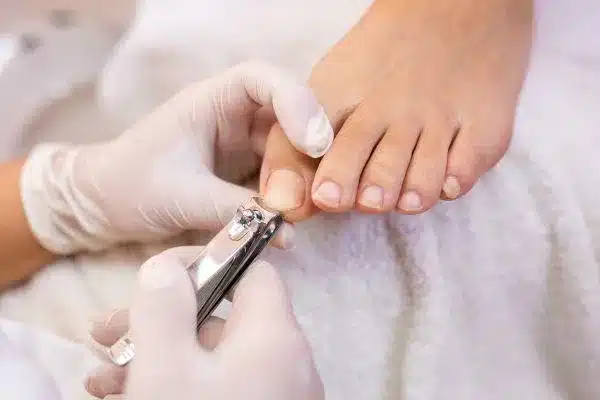
That throbbing pain in your toe is hard to ignore. Every step reminds you something is wrong. If you are in Glasnevin or the surrounding area and dealing with an ingrown toenail that keeps coming back, you are not alone. This is one of the most common problems we treat at Foot Focus Podiatry. Many patients arrive having tried home remedies, pharmacy products, or repeated nail trimming that never quite fixes the issue. This post explains what causes ingrown toenails, when surgery becomes the right option, and exactly what treatment involves.
What causes an ingrown toenail?
An ingrown toenail develops when the edge of the nail grows into the surrounding skin. This creates pressure, pain, and often inflammation or infection. Three main factors cause this to happen.
The first is natural nail shape. Some people have nails that naturally curl at the edges. This involuted shape means the nail presses into the skin fold as it grows. No amount of careful cutting changes the underlying nail structure.
The second cause is friction between your shoe and the nail. Tight footwear, especially narrow toe boxes, pushes the skin against the nail edge. Over time this pressure forces the nail to grow inward rather than outward. Runners and people who spend long hours on their feet often experience this.
The third factor is cutting technique. Cutting nails too short or too far down the sides can leave a sharp edge or small spike called a spicule. This tiny fragment continues growing and pierces the skin. Filing edges smooth after cutting helps prevent this.
When these factors combine or persist, the nail repeatedly damages the same area of skin. That is when simple home care stops working and professional treatment becomes necessary.
What are the symptoms of an ingrown toenail?
The symptoms are hard to miss. You will feel pain along the nail edge, usually at the corner where the nail meets the skin fold. The area may look red and swollen. Touching it or wearing shoes makes the pain worse.
Some patients notice the skin growing over the nail edge. Others see clear or yellowish fluid weeping from the area. In more severe cases, infection sets in. The toe becomes hot, increasingly painful, and may develop pus.
If you notice spreading redness, red streaks moving up the toe, or fever, book an appointment immediately. These signs suggest the infection is progressing and needs prompt attention from a podiatrist or chiropodist.
How is an ingrown toenail treated at Foot Focus Podiatry?
Treatment depends on how severe the problem is and how many times it has returned.
For most patients seeing us for the first time, conservative treatment works well. A CORU-registered podiatrist will clean the area with antiseptic and carefully remove the offending spicule or nail edge. This provides immediate relief in about 80% of cases. The toe feels better straight away because the source of pressure is gone.
However, some ingrown toenails need more than conservative care. Nail surgery is recommended when conservative treatment has not achieved lasting results, when the nail is severely involuted, or when infections keep recurring despite proper care.
The procedure itself is straightforward. Local anaesthetic is injected into the toe, completely numbing it. You feel nothing during treatment. The podiatrist removes only the problematic section of nail, not the entire nail. A chemical is then applied to that part of the nail bed. This prevents that section from ever regrowing. The result is a permanent solution.
Follow-up appointments ensure the toe heals fully. Most patients return to normal shoes within a few weeks. You can find out more about how we treat ingrown toenails at our Dublin clinics on our ingrown toenail page.
What patients in Glasnevin are asking about ingrown toenails
Q: Do I need a GP referral to see a podiatrist for an ingrown toenail?
A: No referral is needed. You can book directly with Foot Focus Podiatry online or by phone. We see patients from across Dublin 11 and Dublin 14 without requiring a GP letter. Most appointments are available within days.
Q: How long does ingrown toenail surgery take to heal?
A: Most patients heal fully within four to six weeks. The toe may be tender for the first few days. You can walk immediately after the procedure and return to most daily activities straight away. Avoid swimming pools until the wound has closed completely.
Q: Will my ingrown toenail grow back after surgery?
A: The section of nail that is removed and treated will not regrow. That is the point of applying the chemical to the nail bed. The rest of your nail continues growing normally. Recurrence after proper nail surgery is rare.
Q: Can I keep exercising with an ingrown toenail?
A: Light activity is usually fine, but pressure on the toe often makes symptoms worse. Running or sports with tight footwear can aggravate the problem. After surgery, most patients return to full exercise within three to four weeks depending on healing progress.
When should you see a podiatrist in Dublin?
Book an appointment if your ingrown toenail has been painful for more than a week despite home care. See a foot specialist if you notice signs of infection including pus, increasing redness, or warmth spreading beyond the nail fold.
Patients who have had multiple ingrown toenails on the same toe should consider a clinical assessment. Repeated problems suggest the nail shape itself is the issue. Conservative care may provide temporary relief, but surgery offers a permanent fix.
If you are based in Dublin 11 near our Finglas clinic or Dublin 14 near Mount Merrion, you can book online at footfocus.ie or call either location directly.
CONCLUSION: Ingrown toenails do not have to keep coming back. When conservative care stops working, a simple surgical procedure can solve the problem permanently. The procedure is quick, pain-free under local anaesthetic, and most patients wonder why they waited so long. As one of Dublin’s largest podiatry providers, Foot Focus Podiatry helps patients across the city get lasting relief. Book online at footfocus.ie or call us at our Finglas or Mount Merrion clinic. Your toes will thank you.