
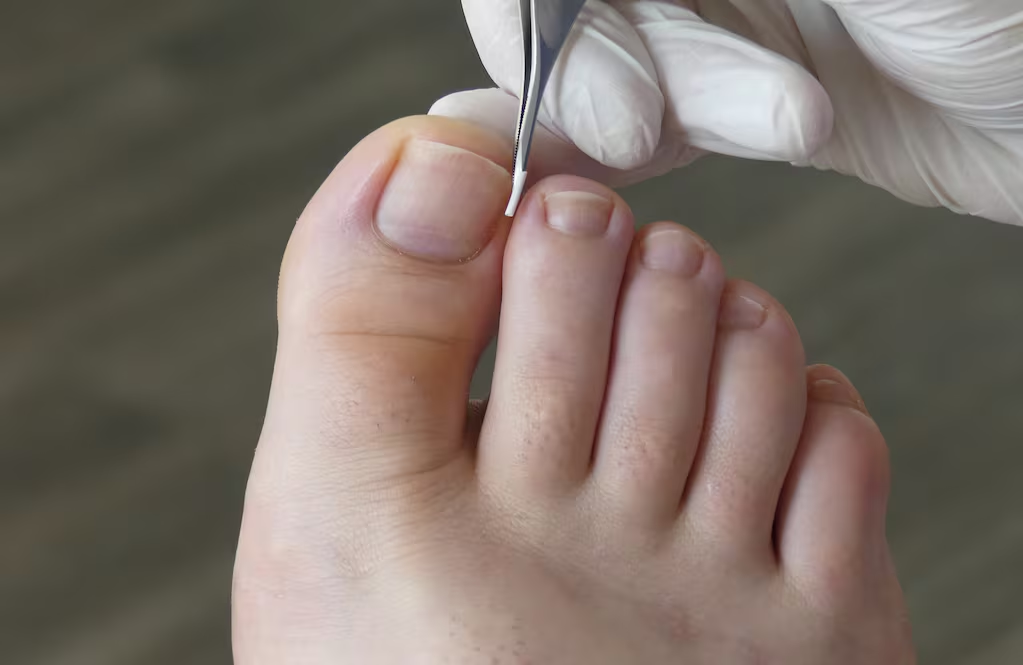
That sharp, throbbing pain at the side of your toenail is hard to ignore. If you are based in Stillorgan or the surrounding South Dublin area and have been dealing with an ingrown toenail that keeps coming back, you are probably wondering whether surgery is the answer. Many patients put off getting proper help because they fear the procedure. The reality is very different from what most people imagine.
This post explains when ingrown toenail surgery is genuinely needed, what the procedure involves, and why it works when other treatments have failed.
What causes ingrown toenails that need surgery?
Ingrown toenails develop when the edge of the nail grows into the surrounding skin. This is a very common problem and can be very painful. Three main factors lead to the kind of ingrown nails that eventually require surgery.
The first is the natural shape of your nail. Some people inherit nails that curl inward at the edges. Over time, this curvature presses into the skin fold and creates ongoing problems. Conservative treatment can help, but severely curved nails often need a permanent solution.
The second factor is friction from footwear. Tight shoes push the skin against the nail edge repeatedly. This constant pressure causes the nail to dig deeper into the tissue. Runners, hikers, and anyone in narrow dress shoes are particularly prone to this.
The third factor is cutting technique. Cutting nails too short or too far down the sides leaves a sharp edge or spicule that grows into the skin as the nail regrows. Many patients we see at Foot Focus Podiatry have been struggling with ingrown nails for months or years because of how they were cutting them.
When these factors combine or persist, the nail becomes chronically embedded. At that point, removing the problem section permanently becomes the most sensible option.
What are the symptoms of an ingrown toenail that needs surgery?
The classic symptom is pain at the side of the nail, usually the big toe. It often starts as mild tenderness and progresses to sharp pain when anything touches the area. Wearing closed shoes becomes uncomfortable or impossible.
You may notice redness, swelling, and warmth around the nail fold. Some patients see pus or discharge, which signals infection. The skin may start to grow over the nail edge in response to the ongoing irritation.
If you have had the same ingrown nail treated multiple times and it keeps returning, that is a clear sign conservative care alone is not enough. Similarly, if the nail has become severely involuted, curving deeply into both sides of the toe, surgery offers the only lasting solution.
Do not wait until the pain affects your daily life or sleep. Persistent or worsening symptoms mean it is time to book an appointment with a podiatrist.
How is ingrown toenail surgery treated at Foot Focus Podiatry?
At Foot Focus Podiatry, we always start with a thorough assessment. Our CORU-registered podiatrists examine the nail, check for infection, and review your history. For many patients, conservative treatment is the first step. This involves cleaning the area with antiseptic and removing the offending spicule or sharp edge. This approach provides immediate relief in about 80 percent of cases.
However, where conservative treatment has not achieved long-term results, or the nail is severely involuted, we recommend nail surgery. The procedure is straightforward and entirely pain free.
A local anaesthetic is injected into the toe, completely numbing it. Once numb, the offending section of nail is removed. A chemical is then applied to the nail bed to prevent that section from regrowing permanently. The rest of your nail remains intact and looks normal.
The whole procedure takes around 30 minutes. Most patients describe it as far easier than expected. Follow-up appointments ensure full healing, which typically takes four to six weeks. The result is a simple, pain-free, permanent solution.
You can find out more about how we treat ingrown toenails at our Dublin clinics on our ingrown toenail page.
What patients in Stillorgan are asking about ingrown toenails
Q: Do I need a GP referral for ingrown toenail surgery in Dublin?
A: No referral is needed. You can book directly with a podiatrist at Foot Focus. We will assess whether surgery is appropriate for your situation at your first appointment.
Q: How long does recovery take after ingrown toenail surgery?
A: Most patients heal fully within four to six weeks. You can walk immediately after the procedure. We provide clear aftercare instructions and schedule follow-up appointments to monitor healing.
Q: Will my nail look normal after the surgery?
A: Yes. Only the problem section of nail is removed, typically a thin strip at one side. The remaining nail continues to grow and looks natural. Most people cannot tell any section has been removed.
Q: Can I keep exercising with an ingrown toenail?
A: Light activity is usually fine, but running or sports that put pressure on the toe should be avoided until healing is complete. Your podiatrist will give you specific guidance based on your activities.
When should you see a podiatrist in Dublin?
Book an appointment if your toenail pain has lasted more than a week without improving. If you notice redness spreading beyond the immediate nail area, pus or discharge, or increasing pain that disturbs your sleep, do not delay.
Anyone who has had the same ingrown nail return multiple times should seek assessment. The same applies if you cannot wear normal shoes due to toe pain.
Foot Focus Podiatry has clinics in Finglas, Dublin 11 and Mount Merrion, Dublin 14. You can book online or call us directly.
CONCLUSION: Ingrown toenails do not have to keep coming back. When conservative treatment fails, a quick surgical procedure solves the problem permanently. As one of Dublin’s largest podiatry providers, Foot Focus Podiatry offers expert assessment and treatment at both our North and South Dublin clinics. Book online at footfocus.ie or call us at our Finglas or Mount Merrion clinic. Your feet deserve to feel good again.