
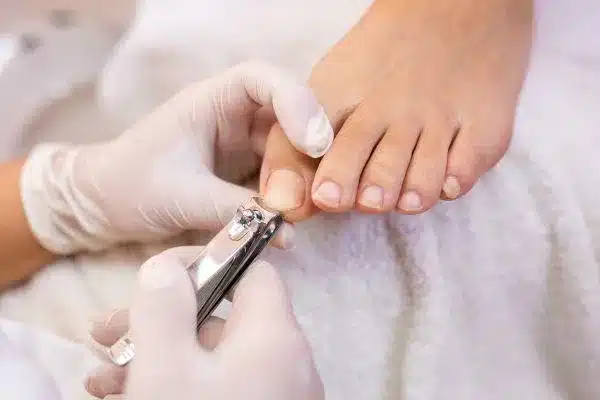
An ingrown toenail can turn a simple task like walking into something you dread. If you live in Dundrum or the surrounding Dublin 14 area and have been putting up with a sore, swollen toe for weeks or months, you are not alone. Many people try to manage the problem at home, hoping it will sort itself out. Sometimes it does. Often it does not. This post will explain what causes ingrown toenails, when surgery becomes the right option, what the procedure actually involves, and how our CORU-registered podiatrists at Foot Focus Podiatry can help you finally solve this problem for good.
What causes an ingrown toenail?
An ingrown toenail happens when the edge of the nail grows into the skin beside it. This causes pain, swelling, and sometimes infection. Three main factors cause this to happen.
The first is the natural shape of your nail. Some people have nails that curve more than others. This genetic tendency means the edges of the nail are more likely to press into the surrounding skin as they grow. No amount of careful cutting will change the underlying nail shape.
The second cause is friction between your shoe and your nail. Tight footwear or shoes with a narrow toe box press the nail into the skin repeatedly. Over time, this pressure causes the nail edge to dig in and break the skin.
The third cause is cutting technique. Cutting nails too short, cutting too far down the sides, or leaving a sharp edge or spicule behind can all trigger an ingrown nail. A tiny spike of nail left in the corner of the nail fold will continue to grow forward and pierce the skin.
Understanding which factor is driving your ingrown toenail helps determine whether conservative treatment will work or whether surgery is the better path.
What are the symptoms of an ingrown toenail?
The symptoms usually start with tenderness along one edge of the nail. You might notice redness and slight swelling where the nail meets the skin. Pressing on the area or wearing closed shoes makes it worse.
As the nail continues to grow into the skin, the pain becomes sharper. The toe may throb even at rest. The skin can become hot to the touch. If infection sets in, you may see pus or notice a foul smell. The skin around the nail may start to grow over the nail edge, making the problem harder to resolve without professional help.
If your toe is red, painful, swollen, or showing signs of infection, do not wait. These are clear signals that you need to see a podiatrist rather than continuing to manage it at home.
How is ingrown toenail treatment approached at Foot Focus Podiatry?
At Foot Focus Podiatry, every ingrown toenail starts with a thorough assessment. The podiatrist examines the nail, the surrounding skin, and the level of infection or inflammation present. This determines whether conservative treatment is appropriate or whether surgery is the better option.
For many patients, conservative treatment is the first step. The podiatrist cleans the area with antiseptic and carefully removes the offending spicule or nail edge. This provides immediate relief in around 80 percent of cases. The toe feels dramatically better straight away.
However, conservative treatment does not always provide a long-term solution. If the nail is severely curved, if the problem keeps returning, or if previous treatments have failed, nail surgery is recommended.
Nail surgery at Foot Focus is a simple, pain-free procedure. A local anaesthetic is injected into the toe, completely numbing it. The offending section of nail is removed, and a chemical is applied to the nail bed to prevent that section from regrowing permanently. Follow-up appointments ensure full healing. Most patients are back in comfortable shoes within days and can return to normal activities quickly.
You can find out more about how we treat ingrown toenails at our Dublin clinics on our ingrown toenail page.
What patients in Dundrum are asking about ingrown toenails
Q: Do I need a GP referral to see a podiatrist for ingrown toenail surgery?
A: No referral is needed. You can book directly with a podiatrist at Foot Focus Podiatry. Many patients in Dublin 14 come to us directly after trying to manage the problem at home. We can assess your toe and recommend the best treatment path at your first appointment.
Q: Is ingrown toenail surgery painful?
A: The procedure itself is pain-free because the toe is completely numbed with local anaesthetic. You will not feel anything during the removal. Afterwards, mild discomfort is normal for a day or two but is easily managed with over-the-counter pain relief.
Q: How long does it take to heal after ingrown toenail surgery?
A: Most patients heal fully within four to six weeks. The initial recovery takes a few days, and you can usually wear normal shoes within a week. Follow-up appointments at our clinic ensure healing is progressing well.
Q: Will the ingrown toenail come back after surgery?
A: When surgery is performed correctly and the chemical is applied to the nail bed, the removed section of nail does not regrow. This makes it a permanent solution. Recurrence rates after partial nail avulsion with phenolisation are very low.
When should you see a podiatrist in Dublin?
Book an appointment if your ingrown toenail has not improved after a week of home care. See a podiatrist if the pain is affecting how you walk or what shoes you can wear. Do not delay if you notice pus, increasing redness spreading beyond the toe, or if the skin is starting to grow over the nail edge.
Patients in Dundrum and across Dublin 14 can book online for our Mount Merrion clinic. If you are based in North Dublin, our Finglas clinic in Dublin 11 offers the same ingrown toenail assessment and surgery service. Online booking is available at footfocus.ie.
CONCLUSION: Ingrown toenails do not have to keep coming back. When conservative care is not enough, a simple surgical procedure offers a permanent fix. As one of Dublin’s largest podiatry providers, Foot Focus Podiatry has helped thousands of patients solve this problem for good. Book online at footfocus.ie or call us at our Finglas or Mount Merrion clinic. Your feet deserve to feel normal again.