
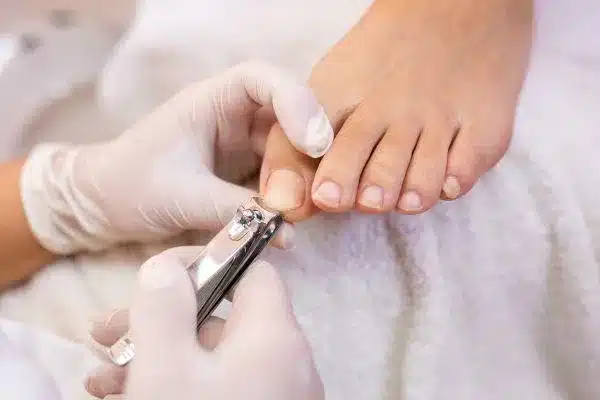
An ingrown toenail can turn a simple task like walking to the shops into a painful ordeal. If you live in Stillorgan or the surrounding South Dublin area, you have likely experienced or know someone who has dealt with this common but frustrating condition. The good news is that most ingrown toenails are preventable with the right nail care habits. And when treatment is needed, proper aftercare makes all the difference to healing. This post covers what causes ingrown toenails, how to prevent them, what treatment involves, and exactly how to care for your toe afterwards.
What causes ingrown toenails?
Ingrown toenails happen when the edge of the nail grows into the surrounding skin. This creates pressure, inflammation, and often significant pain. Three main factors cause most cases.
The first is nail shape. Some people have nails that naturally curl inward as they grow. This genetic tendency means the nail edge is more likely to dig into the skin fold beside it. There is nothing you did wrong. It is simply how your nails grow.
The second cause is friction and pressure from footwear. Shoes that squeeze the toes push the skin against the nail edge repeatedly. Over time, this constant pressure can force the nail to embed into the skin. Tight or narrow shoes are a common culprit, particularly during activities involving lots of walking or running.
The third and most preventable cause is cutting technique. Cutting nails too short or digging down into the corners often leaves a sharp edge or tiny spicule of nail behind. This sharp fragment then grows forward and pierces the skin. Many patients we see at Foot Focus Podiatry developed their ingrown nail after attempting to fix it themselves at home.
What are the symptoms of an ingrown toenail?
The big toe is affected most often, though any toenail can become ingrown. Early symptoms include tenderness along the nail edge, redness of the surrounding skin, and mild swelling. The area feels sore when pressed or when wearing enclosed shoes.
As the nail digs deeper, pain increases. The skin may become hot and inflamed. In more advanced cases, the body tries to protect itself by forming granulation tissue. This appears as red, fleshy tissue growing over the nail edge. Some patients notice discharge if infection develops.
If you have pain that makes walking difficult, spreading redness, or signs of infection, stop waiting. These symptoms will not resolve on their own and often worsen without professional treatment.
How are ingrown toenails treated at Foot Focus Podiatry?
Treatment depends on severity. Our CORU-registered podiatrists assess the nail carefully to determine the best approach.
For most patients, conservative treatment provides immediate relief. This involves cleaning the area with antiseptic and carefully removing the offending nail spicule or sharp edge. Around 80 percent of patients experience significant relief from this single appointment. The procedure takes only minutes and allows you to walk out comfortably.
Where conservative treatment has not achieved long-term results, or the nail is severely curved, nail surgery offers a permanent solution. A local anaesthetic is injected into the toe, completely numbing it. The procedure itself is pain-free. The problematic section of nail is removed, and a chemical is applied to the nail bed to prevent that portion from regrowing. Follow-up appointments ensure the toe heals fully.
Most patients return to normal activities within days of conservative treatment. Nail surgery recovery typically takes a few weeks with proper aftercare. You can find out more about how we treat ingrown toenails at our Dublin clinics on our ingrown toenail page.
What patients in Stillorgan are asking about ingrown toenails
Q: How do I cut my toenails properly to prevent ingrown nails?
A: Follow the natural curve of your nail rather than cutting straight across. Do not cut too short or too far down the sides. Always file the edges smooth afterwards so no sharp corners remain. This technique removes the most common cause of ingrown toenails.
Q: Can I exercise after ingrown toenail treatment?
A: After conservative treatment, most patients can return to exercise within a day or two. Following nail surgery, avoid swimming and high-impact activities until your podiatrist confirms the toe has healed. Walking is usually fine immediately, though roomy footwear helps during recovery.
Q: Will my ingrown toenail come back after treatment?
A: Conservative treatment provides relief but the nail may regrow into the skin if the underlying cause remains. Nail surgery permanently removes the problematic nail section. Combined with proper nail care habits, recurrence is rare after surgical treatment.
Q: Do I need a GP referral to see a podiatrist for an ingrown toenail?
A: No referral is needed. You can book directly with Foot Focus Podiatry online or by phone. We see patients from across Dublin for ingrown toenail assessment and treatment at both our Finglas and Mount Merrion clinics.
When should you see a podiatrist in Dublin?
Book an appointment if your toenail pain has lasted more than a few days despite home care. See a podiatrist urgently if you notice spreading redness beyond the immediate nail area, pus or discharge, or increasing pain that affects your walking.
Do not attempt to dig out the nail yourself. Home surgery often makes the problem worse by leaving a sharp fragment deeper in the skin fold. Patients in Dublin 14 and surrounding areas can book online at Foot Focus Podiatry. We offer appointments at our Finglas clinic in North Dublin and our Mount Merrion clinic in South Dublin.
CONCLUSION: Ingrown toenails are preventable with proper cutting technique and well-fitting shoes. When they do occur, professional treatment provides fast relief and permanent solutions when needed. Foot Focus Podiatry is one of Dublin’s largest podiatry providers, with clinics ready to help you walk comfortably again. Book online at footfocus.ie or call us at our Finglas or Mount Merrion clinic. Your feet will thank you.