
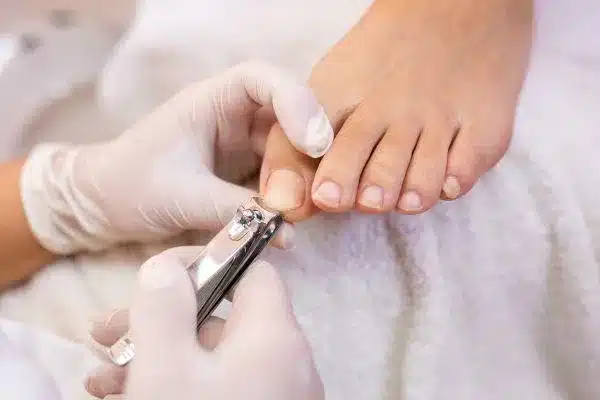
That sharp, throbbing pain at the edge of your toenail can make every step miserable. If you live in Blackrock or the surrounding South Dublin area, you know how an ingrown toenail can disrupt your routine. Walking to the DART, wearing your work shoes, even pulling on socks becomes an ordeal. The good news is that ingrown toenails are very treatable. Even better, with the right knowledge, many cases are preventable. This post explains what causes ingrown toenails, how they are treated at Foot Focus Podiatry, and exactly how to care for your toe afterwards to stop the problem returning.
What causes ingrown toenails?
Ingrown toenails develop when the edge of the nail grows into the surrounding skin. This creates pressure, inflammation, and often significant pain. Three main factors are responsible.
Nail shape and genetics. Some people inherit nails that naturally curl at the edges. This involuted shape means the nail presses into the skin as it grows. No amount of careful cutting will change the basic shape of the nail plate.
Poor cutting technique. This is the most common preventable cause. Cutting nails too short, trimming too far down the sides, or leaving a sharp edge or spicule creates a tiny spike of nail that digs into the skin as the toe flexes. Many patients arrive at our Dublin clinics thinking they cut their nails correctly but have unknowingly left a sharp fragment behind.
Footwear friction. Tight shoes, narrow toe boxes, and repetitive pressure from sport or work footwear push the skin against the nail edge. Over time, this constant friction drives the nail into the surrounding tissue. The combination of tight shoes and incorrect cutting is particularly problematic.
Understanding the cause matters because prevention depends on addressing the right factor. A CORU-registered podiatrist can identify which cause applies to you.
What are the symptoms of an ingrown toenail?
The earliest sign is tenderness along the nail edge. You might notice redness or slight swelling where the nail meets the skin fold. Pressing on the area or wearing enclosed shoes makes it worse.
As the nail digs deeper, pain becomes more constant. The skin may appear puffy and inflamed. In some cases, the body tries to protect itself by forming granulation tissue. This looks like a small red lump at the nail edge.
If infection develops, you may see yellow or green discharge, increased swelling, and warmth around the toe. The pain can become severe enough to affect sleep.
When to stop waiting. If redness is spreading beyond the nail fold, you notice pus, or pain is affecting how you walk, book an appointment. Delaying treatment increases the risk of complications.
How is ingrown toenails treated at Foot Focus Podiatry?
Treatment depends on severity and how long the problem has been present.
Conservative care for early or mild cases. Our first approach is non-surgical. The podiatrist cleans the area with antiseptic, then carefully locates and removes the offending spicule. This small piece of nail is often invisible to the naked eye but causes all the trouble. Removal provides immediate relief in around 80 percent of cases. The whole process takes minutes and most patients walk out pain-free.
Nail surgery for recurring or severe cases. Where conservative treatment has not achieved long-term results, or the nail is severely involuted, nail surgery is the next step. A local anaesthetic is injected into the toe, completely numbing it. The procedure is then entirely pain-free. The offending section of nail is removed and a chemical is applied to the nail bed. This prevents that section from regrowing permanently. Follow-up appointments ensure full healing. The result is a simple, pain-free, permanent solution.
Recovery timeline. Most patients return to normal shoes within two to four weeks after surgery. Healing times vary based on individual factors and how well aftercare instructions are followed.
You can find out more about how we treat ingrown toenails at our Dublin clinics on our ingrown toenail page.
What patients in Blackrock are asking about ingrown toenails
Q: How do I cut my toenails to prevent ingrown toenails?
A: Follow the natural curvature of the nail rather than cutting straight across or rounding the corners too much. Do not cut too short or too far down the sides. Always file the edges smooth afterwards with no sharp edges remaining. A nail file removes tiny spicules that clippers can leave behind.
Q: How long does it take to heal after ingrown toenail surgery?
A: Most patients see significant healing within two to three weeks. Full healing typically completes within four to six weeks. Attending your follow-up appointments and keeping the toe clean and dry speeds recovery. Avoid swimming pools and tight footwear during the healing period.
Q: Can I exercise with an ingrown toenail?
A: Light activity is usually fine if pain allows, but avoid anything that puts repetitive pressure on the toe. Running, football, and tight gym shoes can worsen the problem. After treatment, your podiatrist will advise when you can return to full activity based on how the toe is healing.
Q: Will my ingrown toenail come back after treatment?
A: Conservative treatment resolves the immediate problem but the nail can regrow into the skin if the underlying cause is not addressed. Nail surgery with chemical application to the nail bed prevents regrowth of the treated section permanently. Correct cutting technique and appropriate footwear reduce the risk of new ingrown nails.
When should you see a podiatrist in Dublin?
Book an appointment if you notice any of these specific signs. Pain at the nail edge that does not improve after three to four days of home care. Redness or swelling spreading beyond the immediate nail fold. Any discharge, pus, or unpleasant smell from the toe. Pain that makes you limp or avoid wearing shoes. A previous ingrown toenail returning in the same spot.
Patients from Blackrock and across Dublin 14 can book online at our Mount Merrion clinic. Those in North Dublin can visit our Finglas clinic in Dublin 11.
CONCLUSION: Ingrown toenails are painful but entirely solvable with the right approach. Proper cutting technique and well-fitting footwear prevent most cases. When problems do arise, treatment ranges from quick conservative care to a permanent surgical fix. As one of Dublin’s largest podiatry providers, Foot Focus Podiatry helps patients across the city get back on their feet. Book online at footfocus.ie or call us at our Finglas or Mount Merrion clinic. Your toes will thank you.