
You have tried soaking it. You have tried cutting it carefully. You have even tried those pharmacy treatments. But the pain keeps coming back. The toe swells up again. And you are back to square one.
If this sounds familiar, you are not alone. Ingrown toenails are one of the most common foot problems we see at our Dublin clinics. And while most cases resolve with conservative treatment, some require surgery to fix the problem permanently.
So how do you know when you have crossed that line?
What Patients in Dublin Are Asking
“Do I need surgery for my ingrown toenail or can it heal on its own?”
Most ingrown toenails do not need surgery. In around 80% of cases, careful removal of the sharp nail edge provides immediate relief and the nail grows back normally. Surgery becomes necessary when the problem keeps returning despite proper treatment, when the nail is severely curved into the skin, or when infection has become a recurring issue.
Other questions we hear regularly:
- “Is ingrown toenail surgery painful?”
- “How long does it take to heal after nail surgery?”
What Is Actually Going On With an Ingrown Toenail
An ingrown toenail happens when the edge of the nail grows into the surrounding skin. This can occur for several reasons.
Some people have nails that naturally curve inward as they grow. Others develop the problem through friction between their shoe and the nail edge. Poor cutting technique is another common cause. Leaving a sharp edge or spicule creates a tiny spike that can puncture the skin as the nail grows forward.
When that spike breaks through the skin, your body responds with inflammation. The area becomes red, swollen, and highly sensitive. If bacteria enter through the break in the skin, infection follows. This is when the pain becomes severe and the toe may start producing discharge.
The problem is not just the nail itself. It is the cycle of irritation, inflammation, and regrowth that keeps the condition active.
Why Your Ingrown Toenail Keeps Coming Back
Many people in Finglas, Stillorgan, and across Dublin come to us after months or even years of recurring ingrown toenails. They have had the nail trimmed multiple times. They have used antiseptic. They have been careful with their shoes. Yet it keeps returning.
There are usually two reasons for this.
First, the underlying nail shape may be the problem. If your nail has a pronounced curve, the edges will always tend to dig into the skin as they grow. Trimming provides temporary relief, but the nail simply grows back into the same position.
Second, the nail edge may not have been fully cleared. A tiny fragment left behind can act as a new spicule, restarting the entire cycle within weeks.
Conservative treatment works well when the nail shape is normal and the spicule is fully removed. But when the nail shape itself is the issue, or when repeated treatments have failed, surgery offers a permanent solution.
The Foot Focus Approach to Ingrown Toenail Assessment
At Foot Focus Podiatry, we do not rush to surgery. Every patient receives a thorough assessment first.
We examine the nail shape, the extent of any infection, and how far the nail edge has grown into the skin. We also review your history. How long has this been going on? How many times has it come back? What treatments have you tried?
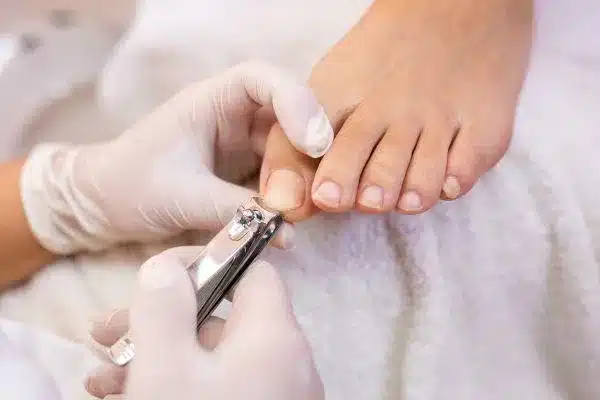
Our first line of treatment is always conservative. We clean the area with antiseptic and use nail nippers to carefully remove the offending spicule or sharp nail edge. This provides immediate relief in the majority of cases.
We then monitor the nail over the following weeks to ensure it grows back correctly. If the nail grows normally and the symptoms do not return, conservative treatment has done its job.
Surgery is only recommended when conservative treatment has not achieved long-term results, or when the nail is severely involuted. You can find out more about how we treat ingrown toenails at our Dublin clinics on our ingrown toenails page.
What Ingrown Toenail Surgery Actually Involves
If surgery is needed, the procedure is straightforward and pain-free.
We inject a local anaesthetic into the toe, completely numbing it. You will not feel any pain during the procedure. Once the anaesthetic has taken effect, we remove the offending section of the nail. This is only the part that is causing the problem, not the entire nail.
A chemical is then applied to the nail bed. This prevents that section of the nail from regrowing permanently. The result is a slightly narrower nail that no longer curves into the skin.
Follow-up appointments ensure the toe heals fully. Most patients are back in normal shoes within a few weeks.
The key word is permanent. Unlike conservative treatment, which relies on the nail growing back correctly, surgery removes the problematic nail section for good. No more cycles of pain and relief. No more repeated treatments.
Frequently Asked Questions
Is ingrown toenail surgery painful?
No. A local anaesthetic completely numbs the toe before the procedure begins. Patients feel pressure but no pain. Post-procedure discomfort is usually mild and manageable with over-the-counter pain relief.
How long does recovery take after nail surgery?
Most patients heal within two to four weeks. You will need to keep the toe clean and dry during healing. Follow-up appointments ensure everything is progressing well.
Will my toenail look normal after surgery?
The nail will be slightly narrower because the problematic edge has been permanently removed. Most patients find the cosmetic result acceptable and far prefer it to ongoing pain and infection.
Can I walk after ingrown toenail surgery?
Yes. You can walk immediately after the procedure. We recommend wearing open-toed shoes or loose footwear for the first few days to avoid pressure on the toe.
How do I prevent ingrown toenails in the future?
Follow the natural curvature of the nail when cutting, but do not cut too short or too far down the sides. Always file the nail afterwards, leaving it as smooth as possible with no sharp edges or spikes remaining.
The Bottom Line
Ingrown toenails keep returning when the underlying nail shape or a missed spicule restarts the cycle of irritation. At Foot Focus Podiatry, we assess each case individually, try conservative treatment first, and only recommend surgery when it offers the best chance of a permanent solution. If you are tired of repeated pain and temporary fixes, book an appointment at one of Dublin’s largest podiatry providers to find out whether surgery is right for you.
Foot Focus Podiatry has experienced podiatrists treating ingrown toenails, plantar fasciitis, heel pain, fungal nails, and diabetic foot care. Book online or call our clinics in North Dublin (Finglas, Dublin 11) or South Dublin (Mount Merrion, Dublin 14).